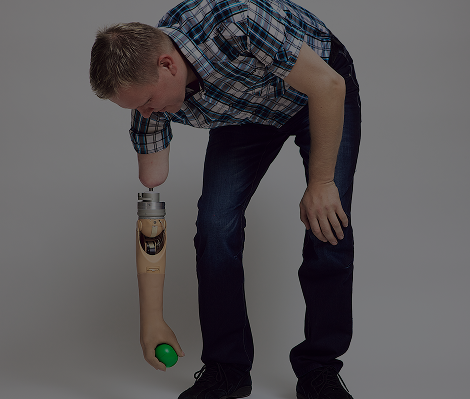
Empowering the Next Generation Intelligent Bionics

Building intelligent control, adaptive learning, and future sensory feedback for next-generation prosthetics — on a clinically proven hardware foundation. 

We are not building a product. We are building a human control platform for bone-anchored bionics.

For three decades, the field has focused on better hardware. The next leap is intelligence — the software, signal processing, and adaptive learning that let a prosthetic respond, learn, and feel like part of the body it is connected to.


In its first product configuration it is tightly integrated with eOPRA — the only osseointegrated implant today that provides a stable bidirectional electrical channel — and this integration delivers the strongest clinical position.

Scientific and institutional foundation

Demonstrated science. Defined pathway. AFYRI stands on three decades of research, with osseointegration, the neuromuscular interface, and the bidirectional signal pathway each validated in peer-reviewed clinical studies. What AFYRI is building is the AI-driven control layer that ties them into adaptive, learning-driven prosthetic control.
eopera_product 2 New
Col 1

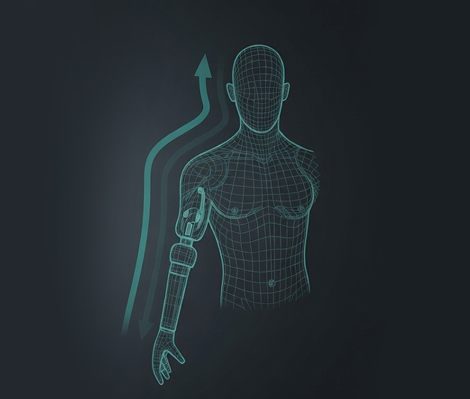
Stable signal interface

Direct connection to bone, nerves, and muscles — not surface electrodes — for reliable, repeatable signal capture across years of daily use.
Col 2

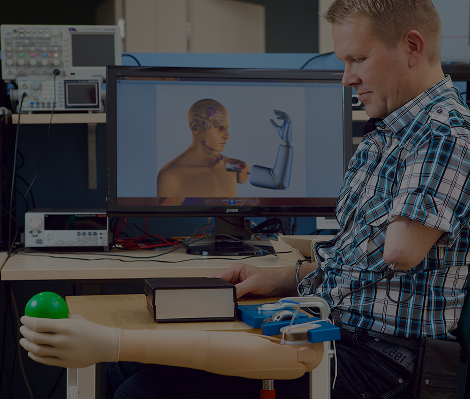
Bidirectional communication

Motor control out, sensory feedback in. The architecture is designed for closed-loop neural interaction between body and device. 
Col 3

Modular software foundation

An AI powered platform — designed to integrate with exisiting and future generations of intelligent limbs.
Our vision is to create the neural intelligence layer that makes the prosthesis feel human.

A robust foundation

Today's eOPRA implant is built on Integrum's OPRA™ Implant System — the clinically established bone-anchored implant platform developed by Dr. Rickard Brånemark and refined over decades of clinical use. The result is a stable, reliable channel — proven across years of daily use — that makes bidirectional intelligent interfacing possible.

World-first clinical demonstration

29th of January 2013, the world's first surgery that permanently implanted neuromuscular electrodes in an amputee, connecting the prosthesis to bone, nerves, and muscles. The first patient still uses the eOPRA system in daily life today. eOPRA remains today the only osseointegrated system that provides a stable bidirectional electrical channel between body and prosthesis.
Read story

Peer-reviewed in The New England Journal of Medicine

Clinical outcomes were published in The New England Journal of Medicine in 2020, demonstrating intuitive and unsupervised daily use of the eOPRA neuromusculoskeletal prosthesis over several years.
View study

U.S. Department of Defence partner

Through a multi-year framework agreement, Integrum supplies OPRA implants to U.S. Department of Defence military hospitals — including Walter Reed National Military Medical Center — for treatment of amputee veterans. 
shirley-ryan-abilitylab-logo-png_seeklogo-393718 white 1

Active research partnership - In collaboration with Shirley Ryan AbilityLab

Shirley Ryan AbilityLab — the top-ranked physical medicine and rehabilitation hospital in the U.S. — leads the clinical trials program to combine osseointegration, targeted muscle reinnervation, and pattern-recognition control and sensory feedback using eOPRA.


The surgeries are performed at at Northwestern Medicine. and the nine million dollar program is funded by NIH.

Let’s build the future of human mobility together

Whether you are an investor, a technology partner, or a research collaborator

- we would like to hear from you.